P5 - Object & Constructivist Messaging Examples

Here are some examples of successful student designs utilizing an:
Object Poster Messaging, and/or a
Constructivist Message approach,
or both, to create effective visual communication.

These examples are similar to what is expected for the P5 - Ad Campaign Project.

__________________________________________________________________

Object Poster Messaging Approach

This design strategy evolved overtime, from Lucien Bernhard’s Sachplakat style, into a highly effective contemporary visual communication approach used by most advertising agency design groups today.

The design ideology juxtaposes and/or integrates, a distinct image with a particular word or phrase, to visually express and conceptually imply a unique positioning of the service or product that you are advertising.

Theory-wise, the approach utilizes a semiotic transfer of signification between the word and image to conceptualize and position a message in a particular way in a viewer’s mind.

Note the use of a simple image and word, how they are visually composed, and how they influence each other in the messaging.

_______

These advertising examples include the project brief because as designers, we need to know “who’s doing the talking, what they want to say, and who they are talking to,” before we can create effective visual design.

If  you have not written a brief for your Ad Campaign, please do so, and then design to it.


 More:


____


More:


__________________________________________________________________

Constructivist Messaging Approach

This design strategy evolved, from Rodchenko’s propogandist political posters, into the International Constructivst approach of the Bauhaus. The design approach traveled crossed the ocean to America and influenced Lester Beall, then spread world-wide as contemporary graphic designers today use it to create visually compelling and effective graphic communication today.

This design ideology uses a collage approach to construct messages, juxtaposing a collection signifying images, symbols, colors, shapes, textures and graphic communicators, into a distinct total image.
Then, like the Object Poster Message Approach, the composite image is “Typophoto-ed” or integrated with a particular word or phrase. This design approach also visually expresses and conceptually implies a unique positioning of the service or product that the message is promoting.

Theory-wise, the approach also utilizes a semiotic transfer of signification between the word and image to conceptualize and position a message in a particular way in a viewer’s mind, but it takes visual communication a step further and begins to create a messaging context for more in-depth communication.

Note the configuration of various images, symbols, including a background, the integration of image and type, how the elements are composed, and how they influence each other in the messaging.

This design approach is literally and conceptually the construction of a message.

_______

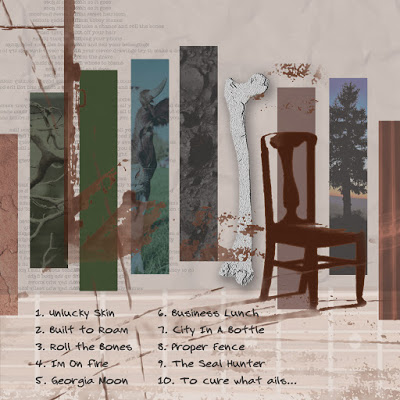
Most of the following examples are Music Album Covers and Postage Stamps, 
but the messaging approach is still the same you need to use for one of your P5 Ads.


_______


_______


_______


 _______


 _______


_______

These are hybrid approach design examples:


P5 - Activity Ad Campaign

For this project you will design an ad campaign promoting a service or product of the organization or company you designed an identity for.

Since the company evolved out of your activity explorations, and their service or project is tied to the activity, you might want to use your designed glyphs and researched images to help design the ad campaign.

This project is somewhat an extension of your original activity statement project, but now a specific sender (your organization) and a specific audience (your persona) has been identified.

The ad campaign will consist of at least two or more advertisements:

• The first ad design must take a Contemporary Object Poster Messaging approach to design.

• The second ad design must take a Constructivist Messaging approach to the design.


_______________________________________________________

ATTENTION:

Due to the Coronavirus threat this class will now be taught online

Note: The DOVAD building, as well as the print lab are closing, so we will NOT attempt any class meetings, nor will we be printing the ads, or hanging them in the hallway

Post design files on your blog as you work on the designs. 
The Project Schedule below indicates what is due on the project and when it it due.
Be sure you have this process posted on your blog on the due dates by 3:00 pm.

The plan right now is for me to send you out  timely individual critiques via e-mail.

I may also be posting some content and instruction regarding the project on the class blog. If so, it be will linked to the Class Content navigation on the blog. 

Try not to get stressed out about the situation at hand. Going online is making this class project more similar to a real-world design project. I may adjust the last two class project design schedules, but right now we are sticking with the due dates listed. Let’s see how things go. If you any questions, inquire amongst yourselves, and/or send me an e-mail. 

I will attempt to hold a video conference critique on this project via Canvas or Google for Tuesday, March 31st.  I will let you know if you are going to attempt it.

I encourage you to  communicate amongst yourselves regarding your work on the project.
You might consider one-on-one communication, or setting up a group discussion and/or conference on Canvas, or in Google, to communicate with one another.

_______________________________________________________

Project Schedule

T - Thursday, March 12th
The project launches.

Be sure to post all of your design process on your blog.

T - Tuesday, March 24th
Two tight design roughs of your ad campaign are due.

I will give you each an E-mail critique of the the design roughs.

T - Tuesday, March 31st
The final ad campaign, and all of your design process, is due.

Upload the final ad campaign onto this post on your blog by Tuesday, March 31st. 
I will give you each an E-mail critique, or we will coordinate a Video Conference group critique of the design roughs.

______________

Examples of Contemporary Word and Image Ads:

Also, check out the post P5 - Object & Constructivist Messaging Examples on the blog.

____

Contemporary Object Poster approach –


____

Contemporary Constructivist Messaging approach –
similar to Synthetic Cusbist collage, but more structurally constructed


P6 - Designer / Ideology / Methodology Poster

The next design project will be both a research and a design project. You will choose a significant graphic designer within the historic lexicon, then conduct in-depth research about their professional life and practice.


The first phase of this project is RESEARCH. 

It must include:

• Design Biography - where they were born, lived, family, education, associations, and employment. Any background information you can cull regarding their development and ideology as a designer.

• Survey of Design Work - a sequenced collection of significant design work, including information regarding the context of the design such as the client, audience, message, and design objective.

• Design Ideology - a description, written and visual, of the designer's personal philosophy of design and it’s relationship to visual communication. This main change over time.

• Methodology and Practice - an analysis and visual portrayal of the designer's approach to visual communication. Their working process, coupled with their ideology, manifested by their visual grammar, conceptual point-of view, imaging, typography, composition, media and style.


The second phase of this project is a DESIGN POSTER.

The poster will present your research information as a compelling design, indicative of the designer. The final printed poster size will be 26 x 40.

The final poster needs to include the following content and design elements:

Name of the Designer (the way the designer would typographically express their name)

Designer Quote and/or Subhead expressing the designer’s ideology and/or methodology

• A Timeline with Political, Cultural and Economic Influences

Samples of Designer’s Work with references (work title, client, date, etc)

• A Short Designer’s Statement and/or paragraph explaining Designer's Ideology/Methodology

• A Dominate/Sub-Dominate/Subordinate hierarchy of Visuals, Information, and Stylistic Conventions and Methodology References

• Anything else you determine Significant

________

The Project SCHEDULE is as follows:

Tuesday, March 31st:
This poster project launches. 
- Set up the project on your blog
- Post your designer's name, and begin your research with a sample of their design work.

Tuesday, April 7th:
Your researchthumbnails and  a tight rough with content is due on your blog.


Tuesday, April 14th:
design comp of the full poster is due on your blog. 

Tuesday, April 21st:
The final digital poster design is due on your blog. We will have a ZOOM conference that evening at 6:00 where you will present your final design.
________


Examples of past student work: